📈 Smart Business Resilience Strategies in 2026

Table of Contents
📈 Smart Business Resilience Strategies in 2026
In 2026, business success is no longer defined by rapid expansion alone, but by the ability to remain resilient, adaptable, and stable in an unpredictable environment. Companies that focus on resilience are better prepared to handle economic shifts, market disruptions, and evolving customer expectations.
Building resilience is not about slowing growth—it is about strengthening the foundation that supports long-term success.
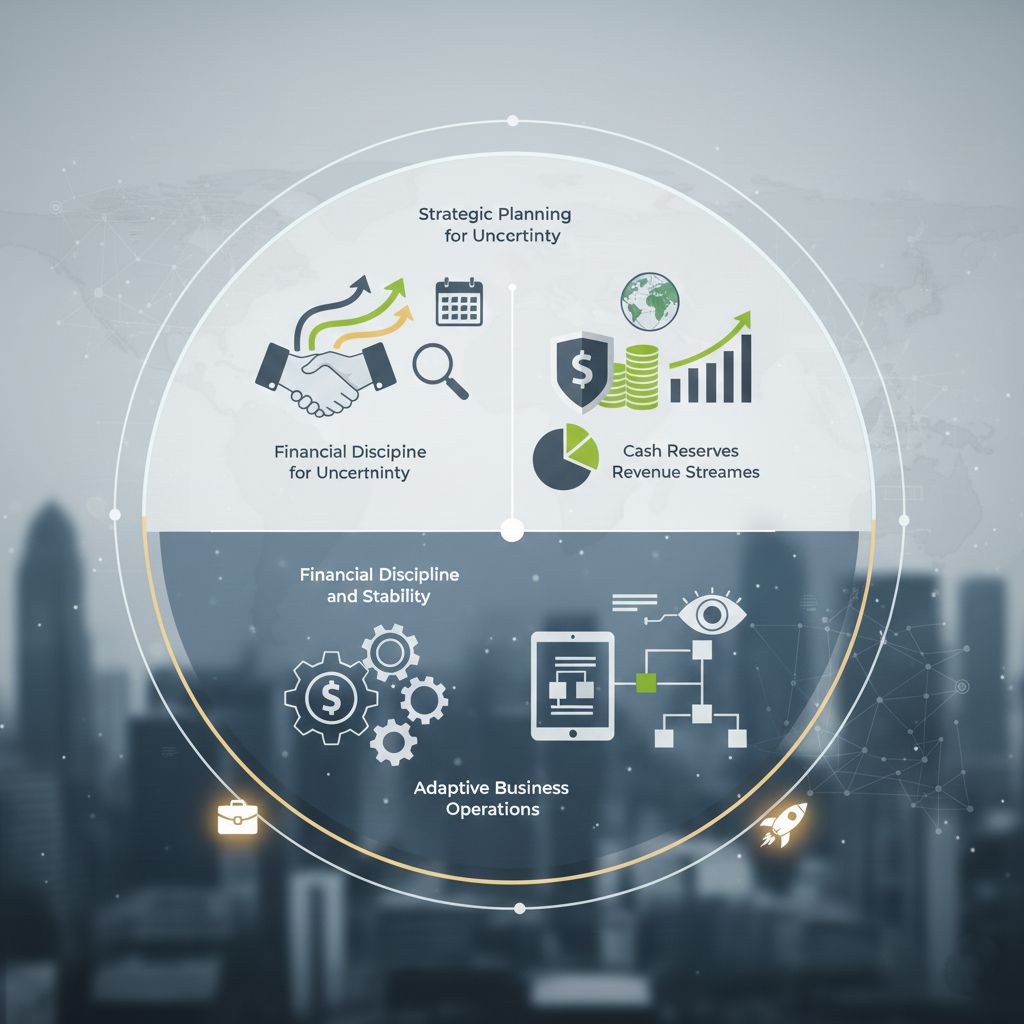
🔹 Strategic Planning for Uncertainty
Resilient businesses plan for change, not just success. In 2026, uncertainty is no longer the exception—it is the norm. Companies that prepare in advance are able to move faster and smarter when conditions shift.
Key strategic practices include:
- Developing flexible long-term strategies that can adapt to market changes
- Preparing multiple growth scenarios instead of relying on one fixed plan
- Aligning short-term actions with long-term business vision
- Reviewing and updating business plans regularly
Strategic foresight allows companies to respond with confidence rather than reacting under pressure, reducing risk and decision-making delays.
🔹 Financial Discipline and Stability
Financial resilience is the backbone of business survival during volatile periods. Without financial control, even strong companies struggle to stay competitive.
Financial stability is achieved through:
- Maintaining healthy cash reserves for unexpected challenges
- Controlling operational and overhead spending
- Avoiding over-reliance on a single revenue source
- Monitoring financial performance through clear metrics and reports
Strong financial discipline enables businesses not only to survive downturns but also to invest strategically when new opportunities arise.

🔹 Adaptive Business Operations
Operational flexibility gives companies a critical advantage in fast-changing markets. Rigid processes slow growth and increase exposure to risk.
Adaptive operations focus on:
- Simplifying internal workflows and reducing complexity
- Enabling faster and more informed decision-making
- Using technology to improve efficiency and coordination
- Adjusting workflows based on real-time performance data
Adaptable operations reduce operational risk, improve productivity, and increase the organization’s ability to respond quickly to change.
◆ Customer Trust and Relationship Strength
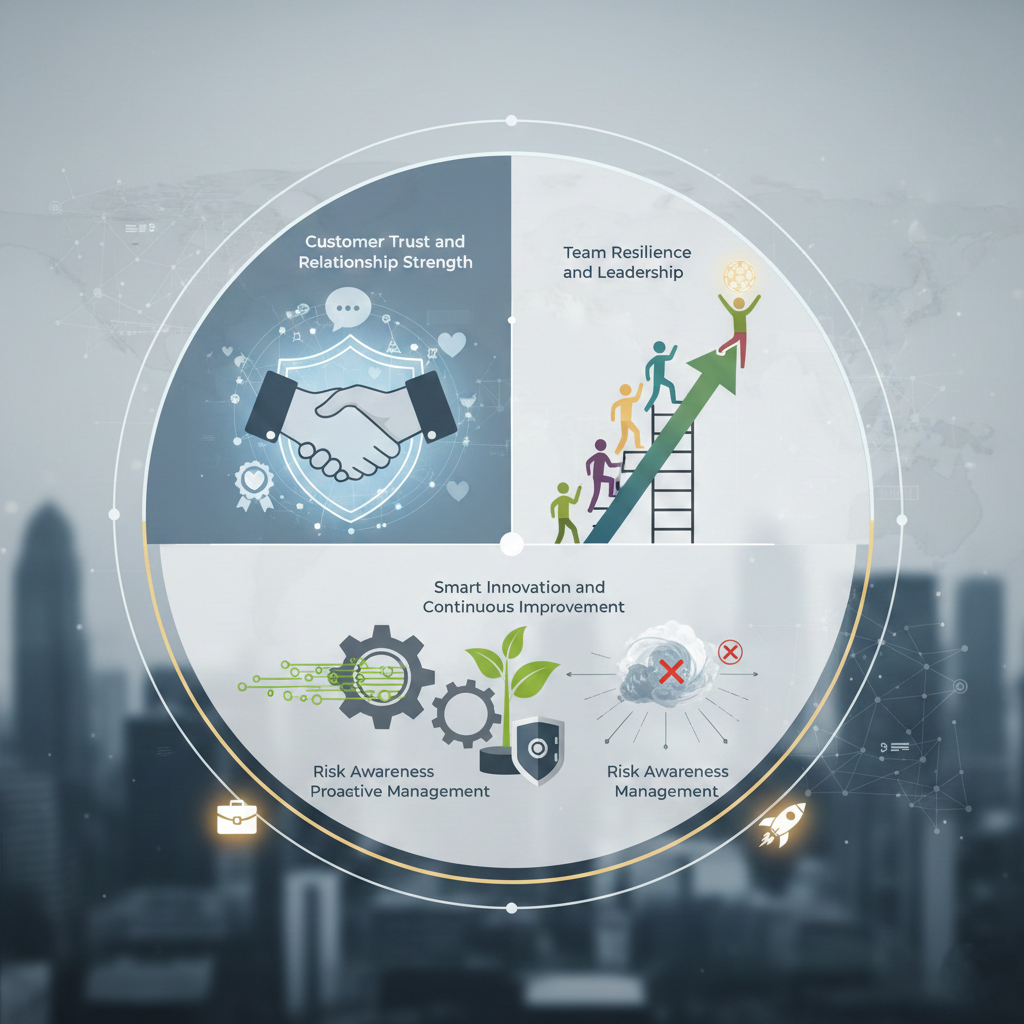
Customer trust is one of the strongest stabilizers during uncertain times. When markets fluctuate, loyal customers provide consistency and confidence.
Strong customer relationships are built through:
- Transparent and honest communication
- Delivering consistent quality and value
- Fast and effective response to customer concerns
- Focusing on long-term relationships instead of short-term wins
High trust leads to predictable revenue, stronger brand reputation, and long-term business security.
◆ Team Resilience and Leadership
A company’s ability to withstand challenges depends largely on its people. Resilient teams maintain focus even when conditions change.
Key factors for team resilience include:
- Encouraging ownership and accountability
- Supporting employee well-being and work-life balance
- Developing leadership skills at all levels
- Promoting open communication and collaboration
Strong leadership and engaged teams help businesses stay productive and aligned during periods of change.
◆ Smart Innovation and Continuous Improvement
Innovation should enhance stability, not create chaos. Sustainable businesses innovate with purpose and direction.
Effective innovation strategies involve:
- Improving existing products before expanding into new areas
- Testing ideas gradually to minimize risk
- Using data and feedback to guide decisions
- Focusing on practical, value-driven solutions
Purposeful innovation supports steady progress and long-term competitiveness.
◆ Risk Awareness and Proactive Management
Prepared companies manage risks before they turn into crises. Awareness allows businesses to act early instead of reacting late.
Proactive risk management includes:
- Identifying operational, financial, and market risks early
- Creating contingency and backup plans
- Monitoring industry trends continuously
- Remaining flexible during execution
Risk awareness transforms uncertainty into strategic advantage.
🔗 External Resources and References
External Resource (DoFollow):
Internal Link: Factors That Made the UAE the Best Place for Investments
◆ Wrapping Up
Business resilience in 2026 is about balance—between growth and stability, innovation and control, ambition and preparedness. Companies that invest in strong strategies, disciplined finances, adaptable operations, trusted customer relationships, and resilient teams are positioned to succeed in any market condition.
True resilience turns challenges into opportunities and uncertainty into long-term success 💼🚀