Employee-Productivity & Efficiency 2026
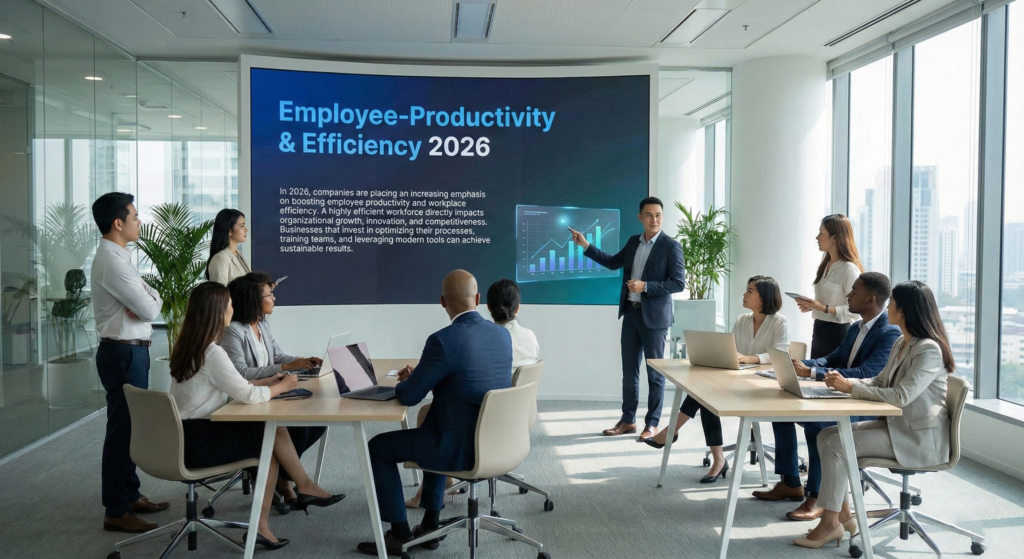
Table of Contents
Employee-Productivity & Efficiency 2026
In 2026, companies are placing an increasing emphasis on boosting employee productivity and workplace efficiency. A highly efficient workforce directly impacts organizational growth, innovation, and competitiveness. Businesses that invest in optimizing their processes, training teams, and leveraging modern tools can achieve sustainable results.
🔹 Building a Productive Work Environment
Creating the right environment is the foundation for high performance. A workplace that supports both comfort and collaboration boosts employee morale and output:
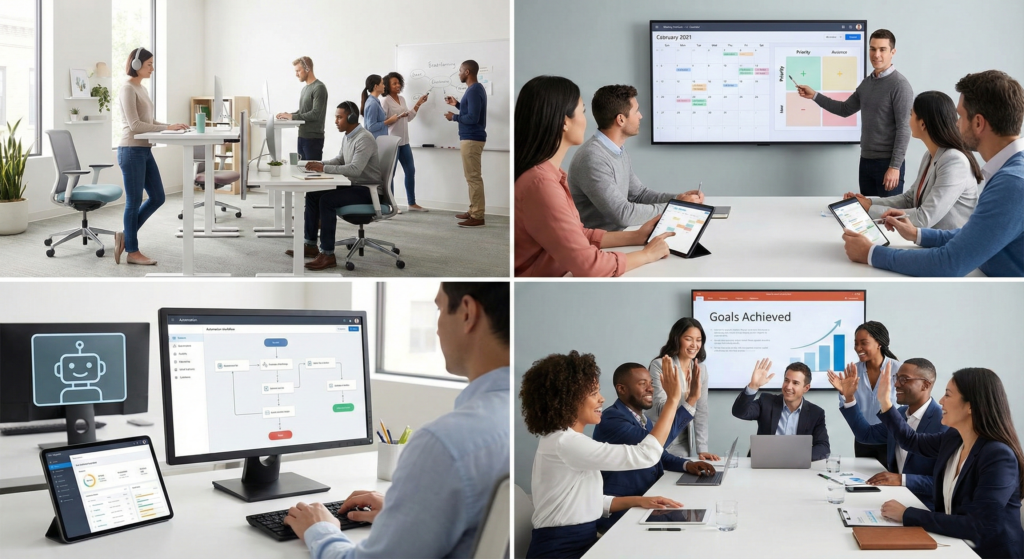
- Ergonomic and Comfortable Workspaces: Ensure desks, chairs, and equipment reduce strain and fatigue. A comfortable physical space leads to longer focus periods and fewer health-related absences.
- Open Communication and Collaboration: Encourage transparent communication through meetings, chat tools, and collaborative platforms. Open dialogue fosters creativity and problem-solving.
- Modern Tools and Technology: Equip teams with reliable software, hardware, and cloud solutions to streamline tasks and reduce bottlenecks.
- Culture of Accountability and Recognition: Celebrate achievements and acknowledge contributions. Accountability ensures everyone understands their role, while recognition drives motivation.
A productive environment motivates employees, reduces inefficiencies, and lays the foundation for high-performing teams.
🔹 Time Management and Prioritization
Effective time management allows teams to focus on what truly matters. Prioritization ensures that energy is spent on impactful work:
- Identify High-Impact Tasks: Focus on projects that drive results and align with company objectives. Use the 80/20 principle to prioritize tasks.
- Planning Techniques and Scheduling Tools: Leverage calendars, project management software, and task trackers to organize daily, weekly, and monthly priorities.
- Minimize Distractions: Encourage dedicated focus periods, reduce unnecessary meetings, and provide quiet zones for deep work.
- Regular Review and Adjustment: Hold weekly or bi-weekly check-ins to reassess priorities, redistribute workloads, and adapt plans as needed.
Teams that manage time effectively can accomplish more with less stress, leading to higher productivity and better job satisfaction.
🔹 Leveraging Technology and Automation
Automation helps employees focus on strategic and creative initiatives by reducing repetitive work:
- Task Management Software: Use tools like Asana, Trello, or Monday.com to organize, assign, and track tasks efficiently.
- CRM and ERP Systems: Streamline sales, customer service, and operational processes to maintain consistency and accuracy.
- Automate Repetitive Processes: Implement bots, scripts, or workflow automations for recurring tasks, approvals, and notifications.
- Analytics for Continuous Improvement: Track team performance, workflow efficiency, and task completion times. Use data to optimize processes.
Integrating technology reduces errors, accelerates operational processes, and frees employees to focus on higher-value, strategic work.sses.
🔹 Employee Training and Skill Development
Investing in employees strengthens overall productivity. Well-trained staff not only perform better but also adapt faster to change:
- Ongoing Training Programs: Regular workshops, webinars, and e-learning platforms keep skills current and relevant.
- Digital, Managerial, and Soft Skills: Equip employees with technical knowledge, leadership abilities, and communication skills.
- Mentorship and Peer Learning: Encourage knowledge-sharing between experienced staff and new hires.
- Growth Paths and Incentives: Define career progression, certifications, and reward high performers.
A skilled workforce can adapt quickly, take on new challenges, and contribute to organizational goals effectively.
🔹 Effective Leadership and Team Alignment
Leadership directly influences productivity and morale:
- Clear Goals and Expectations: Define objectives for teams and individuals to align efforts.
- Align Objectives with Company Strategy: Ensure every project and task contributes to overarching business goals.
- Feedback and Performance Reviews: Conduct regular check-ins to identify strengths, address weaknesses, and guide development.
- Empower Decision-Making: Encourage employees to take ownership and make informed choices.
Strong leaders inspire accountability, maintain focus, and drive measurable results across teams.
🔹 Monitoring Performance and KPIs
What gets measured gets improved. Tracking performance ensures teams are efficient and aligned:
- Define Key Performance Indicators (KPIs): Choose relevant metrics for productivity, quality, and results.
- Dashboards and Reports: Visualize performance trends and progress in real-time.
- Data-Driven Adjustments: Adapt strategies based on performance analytics.
- Recognition and Gap Addressing: Celebrate achievements and implement corrective actions where needed.
Consistent monitoring keeps teams on track and fosters a culture of continuous improvement.
🔹 Flexible and Adaptive Work Culture
Agile organizations outperform in changing markets:
- Adaptability and Openness: Promote willingness to adjust workflows, roles, or strategies as needed.
- Culture of Experimentation: Encourage testing new methods, ideas, or processes without fear of failure.
- Learning from Mistakes: Treat errors as opportunities for improvement, not blame.
- Continuous Refinement: Update processes, tools, and policies based on insights and employee feedback.
A flexible culture turns challenges into opportunities and ensures long-term resilience.
🔗 External Resources and References
External Resource (DoFollow):
Internal Link: Factors That Made the UAE the Best Place for Investments
🔹 Wrapping Up
Boosting employee productivity and workplace efficiency is an ongoing process. By focusing on productive environments, technology integration, skill development, strong leadership, and adaptive culture, companies can thrive in 2026 and beyond.
Efficient, well-trained teams transform business goals into measurable results, enhance operational performance, and sustain long-term growth 🚀💼