How Discipline Sustains Business Success When Motivation Fades
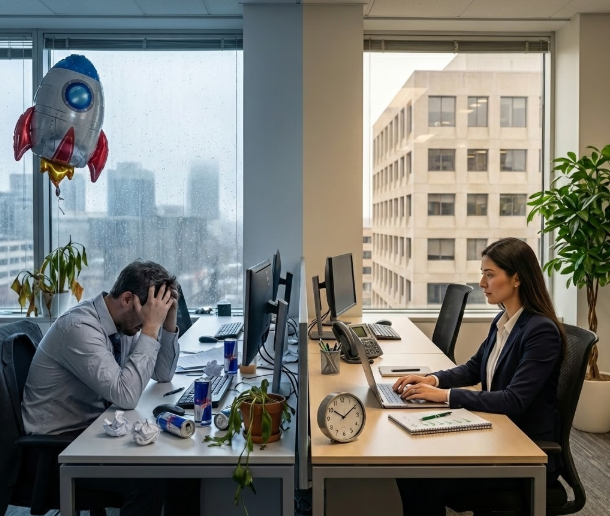
Table of Contents
How Discipline Sustains Business Success When Motivation Fades
In business culture, motivation is often treated as fuel. Leaders try to inspire teams, boost morale, and spark enthusiasm to drive results. While motivation can create strong starts, it rarely sustains long-term success.
Motivation fades.
Discipline endures.
The companies that survive pressure, competition, and change are not those driven by constant excitement—but those built on disciplined execution.
🔹 Motivation Without Discipline Is Unstable
Motivation is emotional. Emotions fluctuate.
Businesses that rely heavily on motivation often experience:
Inconsistent performance
Short-lived productivity spikes
Unpredictable outcomes
Dependence on external pressure
When teams act only when they feel inspired, execution becomes irregular. Important tasks are delayed. Standards shift. Momentum disappears as soon as enthusiasm drops.
Motivation can start movement.
Discipline sustains it.
Without discipline, progress depends on mood rather than commitment.
🔹 Discipline Creates Reliability and Control
Discipline replaces guesswork with structure.
Disciplined organizations focus on:
Clear routines
Defined standards
Consistent follow-through
Accountable execution
Work gets done regardless of motivation levels. Results become predictable. Leaders spend less time pushing and more time planning.
Reliability is built through disciplined behavior repeated daily.

Why Discipline Matters More Than Motivation in Business
🔹 Consistency of Action Builds Long-Term Results
Success is not created by intense moments—it is built through repetition.
Disciplined companies prioritize:
Daily execution of core tasks
Process adherence
Continuous improvement
Measurable progress
Small disciplined actions compound over time. Instead of chasing breakthroughs, these organizations build steady growth.
Long-term success is boring—but powerful.
🔹 Discipline Reduces Stress and Chaos
Motivation-driven environments react.
Discipline-driven environments operate.
When discipline exists:
Deadlines are respected
Responsibilities are clear
Decisions follow principles
Pressure is managed calmly
Chaos decreases because expectations are stable. Teams know what to do—even under stress. This stability protects performance during uncertainty.
Control is not about force.
It is about consistency.
🔹 Discipline Strengthens Culture and Accountability
Culture collapses when rules change based on emotion.
In motivation-driven cultures:
Standards fluctuate
Feedback feels personal
Accountability weakens
Trust erodes
Discipline creates fairness. Everyone is held to the same expectations. Performance is evaluated objectively. Accountability becomes normal—not confrontational.
Strong cultures are disciplined cultures.
Why Discipline Wins in Leadership
🔹 Disciplined Leaders Build Trust
Disciplined leaders are predictable—in the best way.
They:
- Follow through on commitments
- Maintain steady communication
- Make decisions based on principles
- Stay calm under pressure
Teams trust leaders who act consistently. Trust improves alignment. Alignment improves execution.
Leadership is not about intensity.
It is about reliability.
🔹 Consistency in Leadership Creates Psychological Safety
Employees perform best when leadership behavior is stable.
When leaders act with discipline:
- Expectations remain clear
- Feedback feels fair, not personal
- Decisions are not influenced by mood
- Teams feel safe taking responsibility
Psychological safety allows teams to focus on performance instead of self-protection. People stop guessing what version of leadership they will face each day—and start executing with confidence.

🔹 Disciplined Leadership Improves Decision Quality
Discipline slows impulsive decisions without slowing progress.
Disciplined leaders:
- Evaluate options before reacting
- Follow defined decision frameworks
- Avoid emotional overcorrection
- Learn from outcomes consistently
This leads to fewer mistakes and stronger long-term outcomes. Instead of fixing self-inflicted problems, leaders invest time in strategy and improvement.
Good leadership decisions are not fast or emotional.
They are deliberate and repeatable.
🔹 Discipline Reduces Dependence on Willpower
Willpower is limited.
Systems of discipline are not.
Disciplined organizations rely on:
- Habits instead of motivation
- Standards instead of emotions
- Processes instead of pressure
This reduces burnout and creates endurance. Teams stop forcing progress and start sustaining it.
🔹 Clear Standards Replace Constant Supervision
Disciplined leadership removes the need for micromanagement.
When standards are clear:
- Teams self-correct
- Accountability becomes normal
- Performance expectations are understood
- Leaders focus on direction, not control
Discipline shifts leadership from constant oversight to strategic guidance. This builds mature teams capable of operating independently.
🔗 External Resources and References
External Resource (DoFollow):
Internal Link: Factors That Made the UAE the Best Place for Investments
Conclusion
Motivation excites.
Discipline delivers.
Motivation can launch effort.
Discipline carries it forward.
Businesses that prioritize discipline build resilience, stability, and trust. They perform consistently—even when conditions are difficult.
In the long run, discipline outlasts motivation—because success is not about how you feel today, but what you do every day. 🧠📊